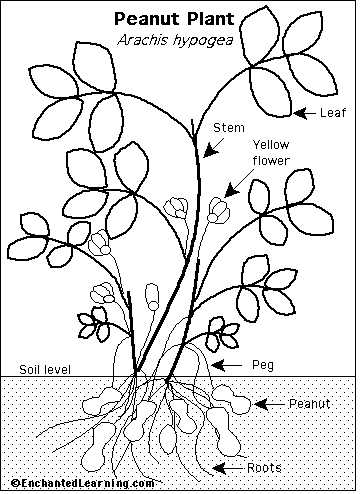
 The peanut plant (Arachis hypogea) is a legume that is native to South America (it now grows in warm areas around the world).
The peanut plant grows to about 60 cm tall. It has small yellow flowers (1-2 cm long). The flowers bloom for only about half a day; the blossoms are self-pollinating. About 4 days later, a stem (also called a peg) will grow from the flower and head into the soil. At the end of each stem, the seed pods (peanuts in the shell) will grow. The peanut is an annual plant (it completes its life cycle in one year).
The American inventor George Washington Carver (1865?-1943) discovered many important uses for the peanut.
Grow a peanut plant: You can grow your own peanut plant by planting a raw peanut (these are sometimes found in grocery stores - do not buy the roasted ones, they will not grow). Plant the entire peanut in the hull or just the seed (the peanut with the brown skin still on it) 1 to 2 inches deep in well-drained soil. Keep it moist and warm until it germinates (it should take about a week). It takes about 3 months for peanuts to form. After digging up the mature plant, "cure" the plant (let it dry out -hang it up in a garage) for about a week. Then roast and eat the hulled nuts.
