
|
| AllAboutDinosaurs.com More on Seismosaurus |
Seismosaurus | Animal Printouts |
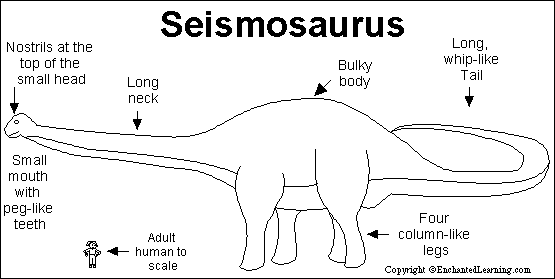
Diet: Seismosaurus was an herbivore (it ate only plants). Seismosaurus had blunt, peg-like teeth, useful for stripping foliage. It must have eaten a tremendous amount of plant material each day to sustain itself. It probably swallowed leaves whole, without chewing them, and had gastroliths (stomach stones) in its stomach to help digest this tough plant material. Many of these fossilized gastroliths have been found in the middle of the Seismosaurus skeleton. Its main food was probably conifers, which were the dominant plant when the large sauropods lived. Secondary food sources may have included gingkos, seed ferns, cycads, bennettitaleans, ferns, club mosses, and horsetails.
Anatomy: Seismosaurus was a long-necked, long-tailed plant-eater with a small head, thick legs, and a bulky body. It had nail-like claws on its feet and an enlarged claw on each big toe. Its front legs were relatively long.
Fossils and Name: Seismosaurus was named by paleontologist Gillette in 1991. Seismosaurus fossils have been found in New Mexico, USA.
Classification: Seismosaurus was a huge herbivorous dinosaur, a saurischian ("lizard hipped"), a sauropodomorph (a long-necked, long-tailed plant-eater that walked on four legs), a sauropod (a large herbivore), and a member of the Family Diplodocidae (a peg-toothed sauropod). The type species is S. hallorum. Some paleontologists think that Seismosaurus may be a very large example of the genus Diplodocus and not a separate genus.
| Search the Enchanted Learning website for: |